Linux is a robust, modular, and highly customizable operating system kernel that underpins a vast ecosystem of distributions. My experience with Linux has been shaped by a desire for technical control, transparency, and efficiency in my daily computing.
Arch Linux and EndeavourOS: Precision and Control
After experimenting with several distributions, I settled on Arch Linux for its simplicity, transparency, and rolling release model. Arch provides direct access to the latest kernel, drivers, and userland software, which is invaluable for both development and hardware compatibility. EndeavourOS, built on top of Arch, offers a streamlined installation process while preserving the core Arch philosophy: minimalism, user-centric configuration, and comprehensive documentation via the Arch Wiki.
The Linux Kernel: Engineering at Scale
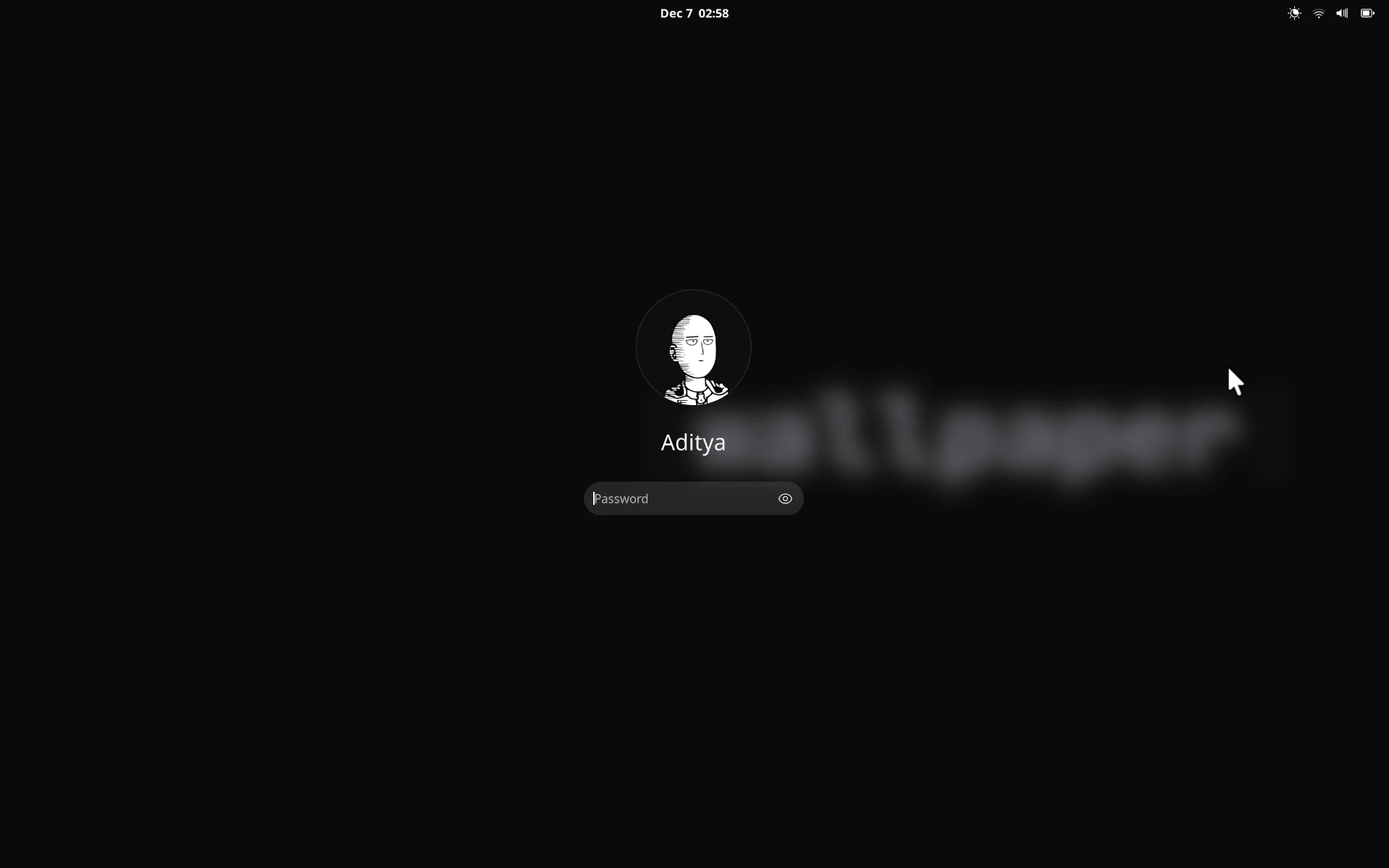
The Linux kernel is a monolithic, modular kernel that supports a wide range of hardware architectures. Its open development model enables rapid iteration and security patching. On Arch, switching between kernel versions (mainline, LTS, Zen, or custom builds) is straightforward, allowing for fine-tuned performance or experimental features as needed.
Customization and Theming
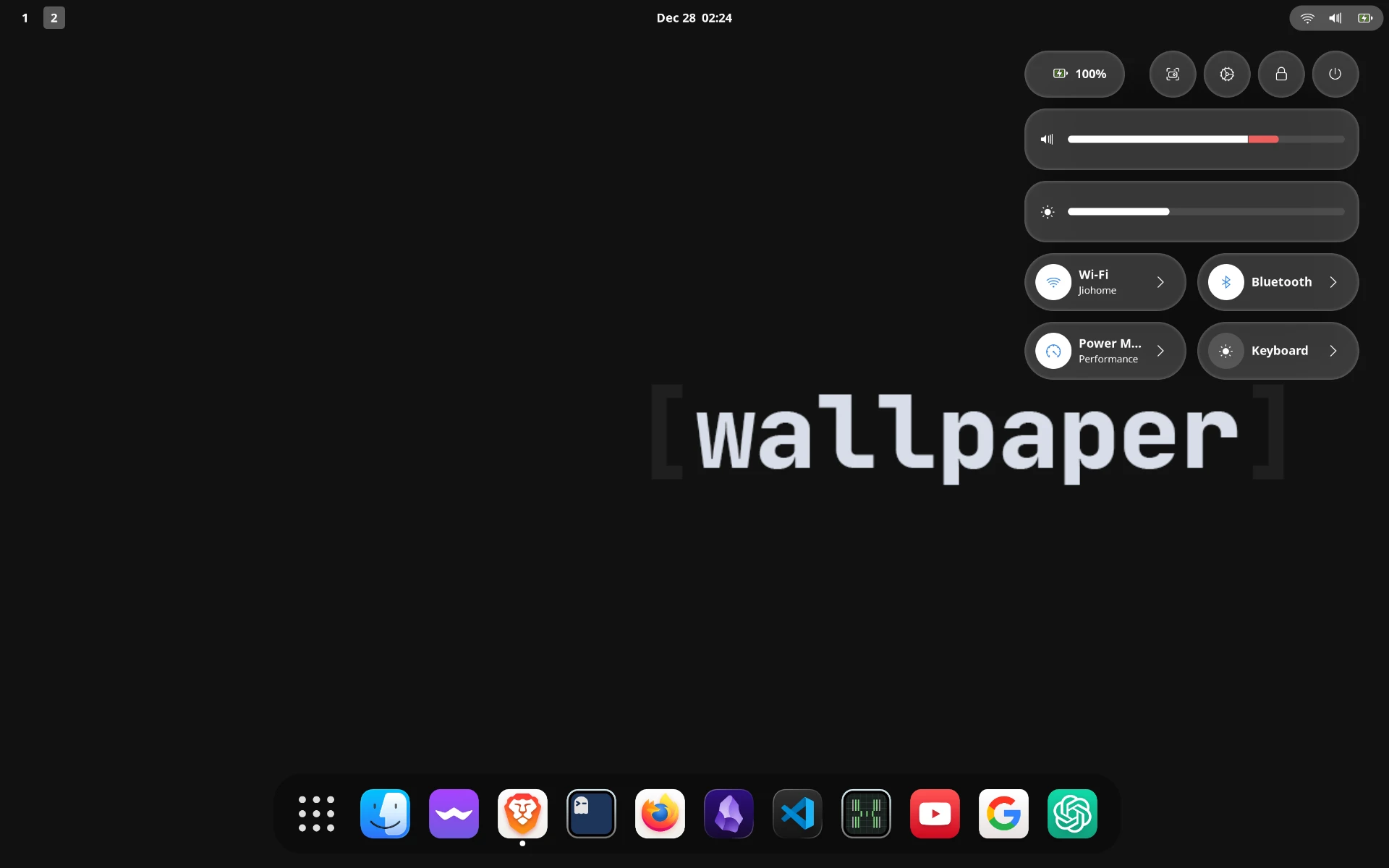
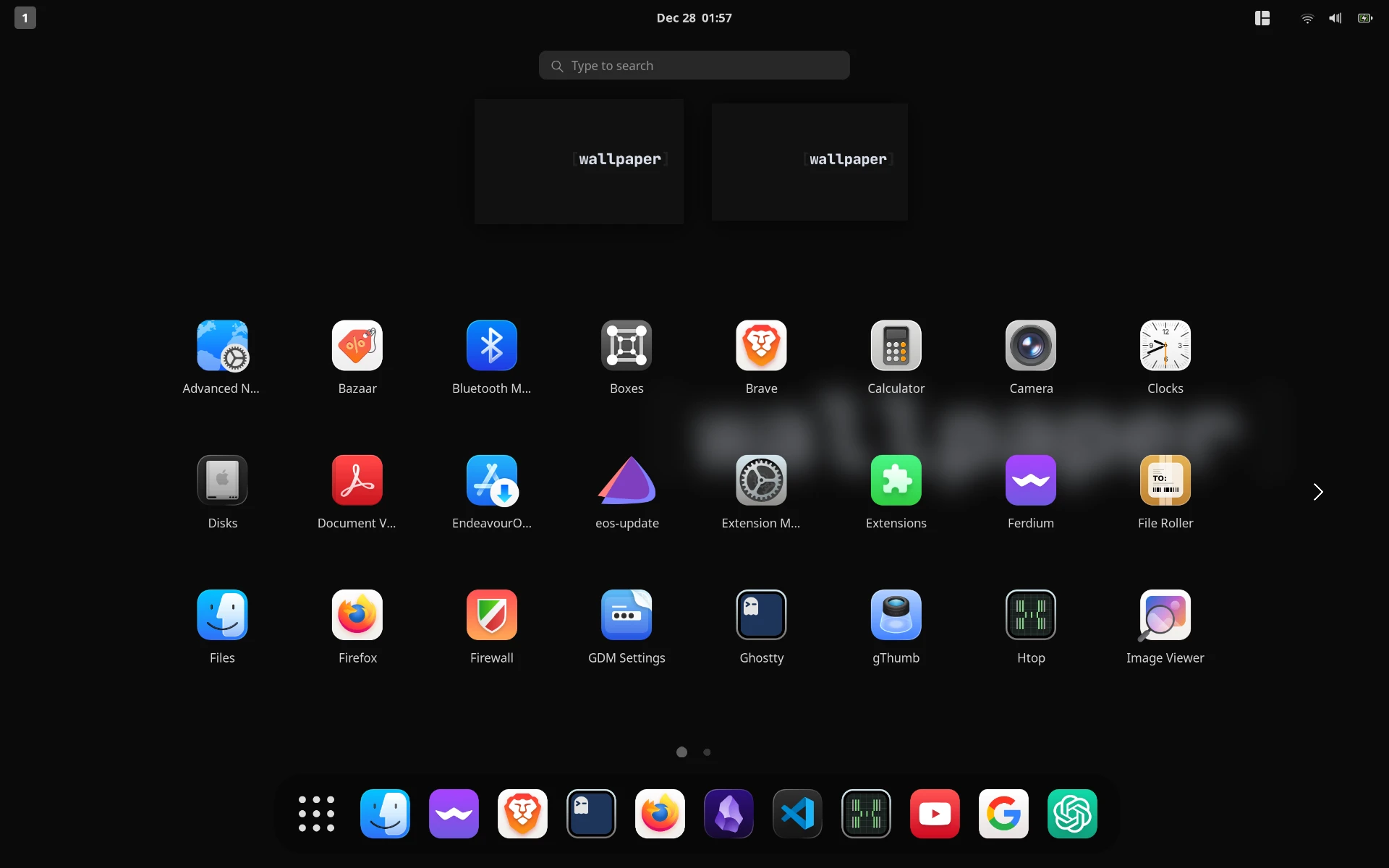
One of Linux’s greatest strengths is its customizability. I use GNOME as my desktop environment, but with extensive modifications: custom extensions, keybindings, and the MacTahoe GTK theme for a consistent, monochrome aesthetic. This level of control is not possible on proprietary systems, where UI and workflow are largely fixed.

GNOME Workspaces and Productivity
GNOME’s dynamic workspaces provide a seamless way to organize tasks, projects, and applications. Unlike Windows’ static virtual desktops, GNOME workspaces are context-aware and can be created or destroyed on demand. This enables a highly efficient, distraction-free workflow, especially when combined with tiling extensions and keyboard-driven navigation.
Package Management and the AUR
Arch’s package manager, pacman, is fast, scriptable, and reliable. The Arch User Repository (AUR) extends this further, providing access to a vast array of community-maintained packages. Building and installing software from source is straightforward, and system updates are atomic and rarely disruptive. Unlike Windows, where software management is fragmented, Linux offers a unified, transparent approach.
Community, Documentation, and Learning
The Linux ecosystem thrives on collaboration and documentation. The Arch Wiki, forums, and IRC channels are invaluable resources for troubleshooting and learning. This culture of openness and peer support accelerates both problem-solving and skill development.
Linux is not just a tool for experts; it is a platform for anyone who values technical depth, customization, and a transparent relationship with their computer.
Bonus: Pixel 8 Monochrome Setup

This is my Pixel 8 lock screen and home screen, both set to a monochrome theme that matches my Linux desktop using the MacTahoe GTK theme. The visual consistency across devices is both aesthetically pleasing and functionally calming.